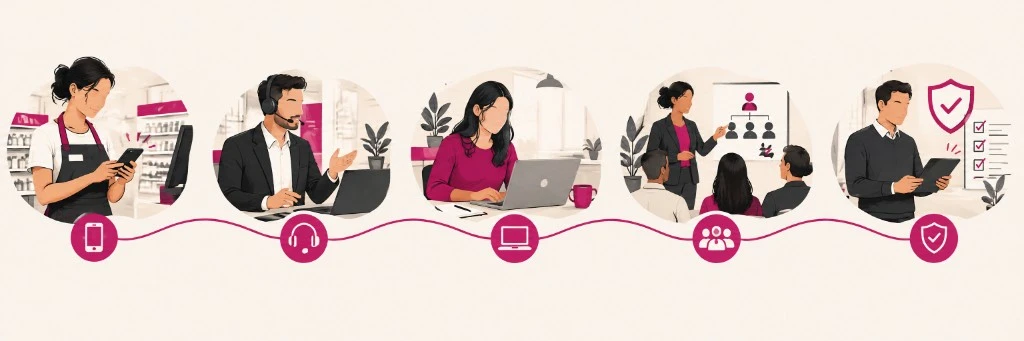
Microlearning is a key method for consolidating learning and reinforcing ongoing training, all the more so when we deliver it on mobile.
By its nature it allows short, specific actions that pass on knowledge and assess what people already know. Agile, easy to use and roll out, and unobtrusive.
But, like every method, it is not the answer to everything. There are projects where it fits very well and others where it is not the best option. Microlearning should be one more piece of a wider training strategy.
Examples where microlearning on mobile works
I describe cases where we have applied mobile microlearning in companies, and why it worked (and a couple of examples where it did not). I do not go into specific clients or content: the type of training, the advantages, and the approach. I also leave out uses that are already very widespread (languages, informal learning on social networks), where microlearning plus mobile has worked for years.
Product / sales training
With microlearning it is easy to present a product range or a service, the key points, and to ask about the sales pitch, objections, technical details, cross-selling, and so on, in clear, direct cards. It works much better when the course focuses on a few products, explained in detail without an overload of information, and with questions about those same products. Later it also works for new hires.
The advantage of mobile is obvious: the factory floor, offices, stores, and salespeople train at the same time, and quickly.
Typical topics:
- Product / service training (the Phone House case)
- Competitor analysis
- Product / service updates
- Sales / customer service processes
- Brand knowledge
- Product-focused welcome plans
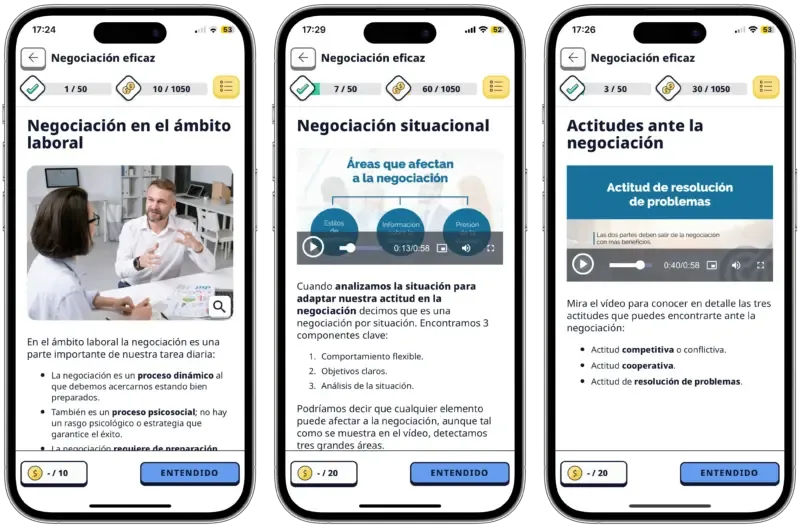
Catalog pieces that fit include Effective Negotiation and Emotional Intelligence and Customer Service.
Most of these courses come to about 40 screens and one week (around 8 screens a day). It is worth having a foundation course (1–2 weeks) and a shorter review course at 2–3 weeks, to consolidate.
Regulation / compliance
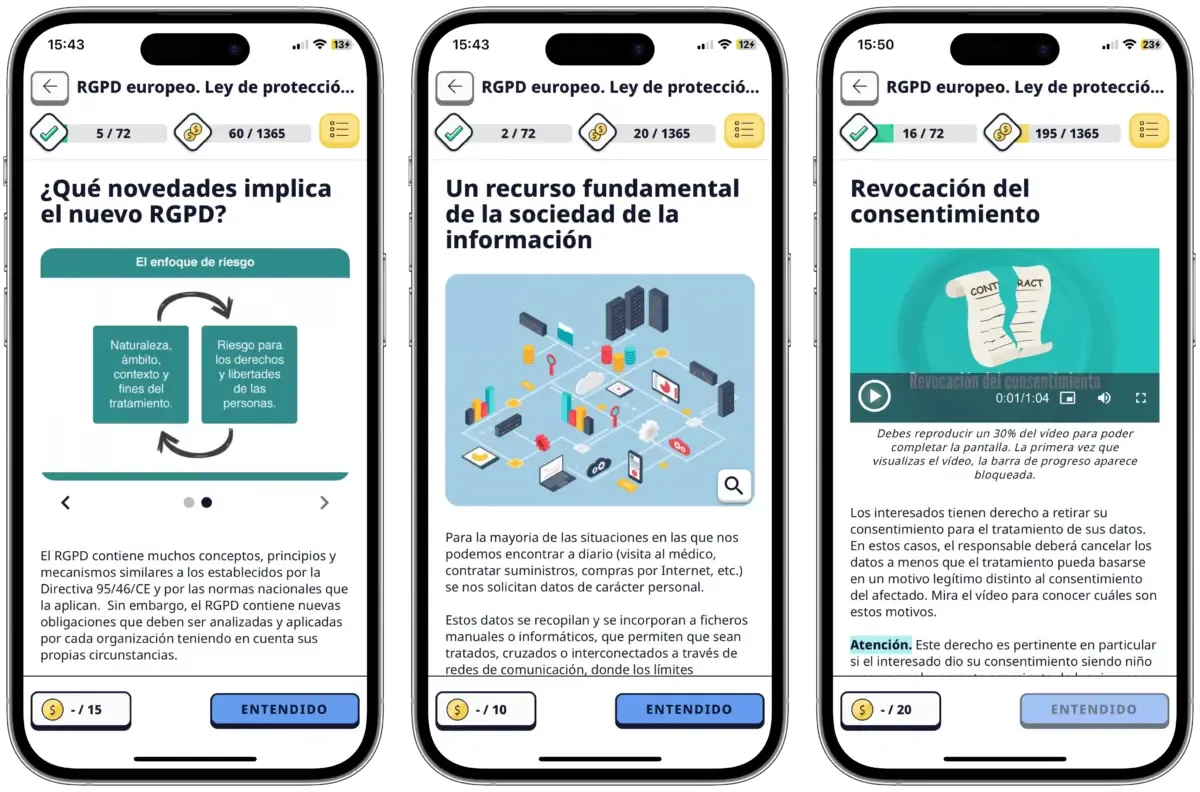
A regulation is, at heart, a set of ideas the employee needs to know — and the company needs to check that they have read them and understand them. The key is the instructional treatment: videos for dense concepts and practical cases of how to apply them.
These courses tend to be longer (2–3 weeks, around 70–90 screens). We recommend a second reinforcement course from the one-month mark, with more time for the concepts to settle.
As well as making acquisition easier (little by little, on a set pace), the course stays available on mobile even after it has finished, so people can look it up when they need to.
Examples of use:
- GDPR
- Health and safety
- Compliance / criminal liability risks
- Use of company services (internal protocols)
Soft skills training
Emotional intelligence, time management, stress, teamwork… Microlearning plus mobile helps people take in abstract concepts step by step, almost without effort.
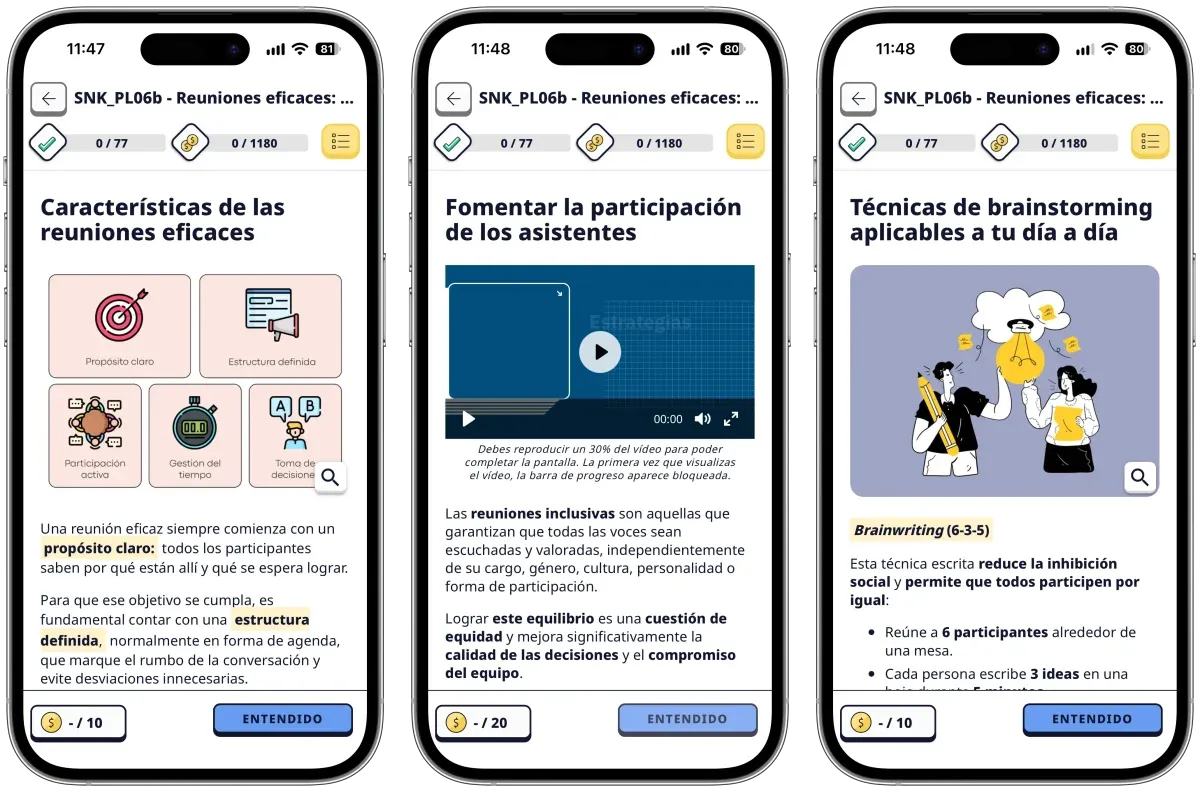
They are usually courses of 40–60 screens (~2 weeks), comfortable and aimed at applying what was learned. On a phone they fit into a coffee break or while you wait for a meeting.
In the catalog: Effective Meetings, Stress Management, Mindfulness, or Mental Health at Work.
Events
Here the model does not compete with tools like Kahoot!: prior registration is required, and we put learning ahead of competition. As a complement to an event, the result has been very positive.
The content is usually very short, with questions people can answer without prior knowledge (a questions-only course): 10–25 items, one day. After the event, a short reminder reinforces the key points.
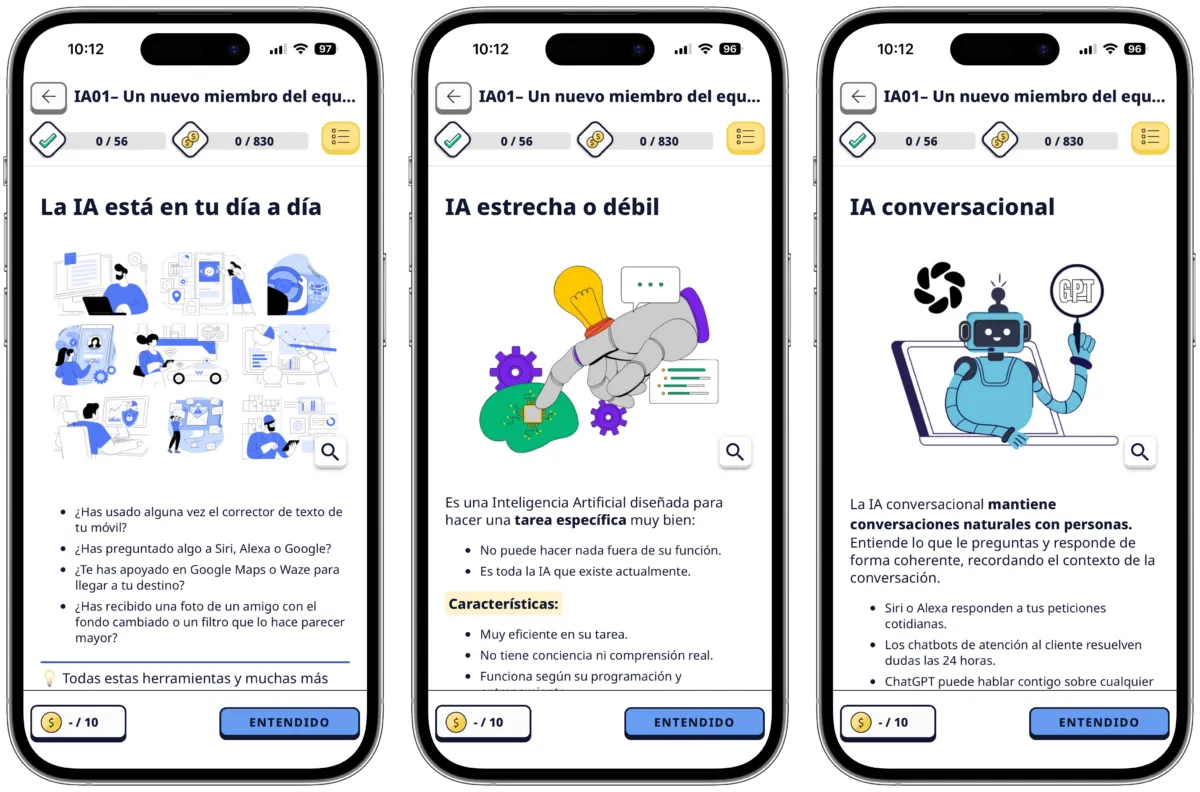
We have used it at company conventions and industry events. If the event is about AI or transformation, a catalog microcourse such as AI: a new team member works as a post-event bridge.
Cases where it did not work
We have also had projects where microlearning plus mobile did not fit:
- It launched right after face-to-face sessions, too soon: learners still had the concepts fresh, and the course was seen as a compilation of notes, not as reinforcement.
- The topic was too abstract, or the source material did not allow graphics, videos, questions, or practical cases that place the user in a real moment of doubt. Without that, the course only repeats concepts already seen.
- An unmotivated audience: communications about the project did not give reasons (intrinsic or extrinsic) for doing it.
In other cases we never got started: the material could not be turned into concrete concepts and questions, or other methods were a better fit (sometimes a well-designed PDF or a face-to-face session).
When the material does support the method and we develop a custom microcourse, the results are usually excellent.
Ready to try it? Browse the microcourse catalog or tell us about your case.
If you want to go further: