In many companies, training competes with the day-to-day operation. If a course asks for hours in a row, it gets postponed. If it is postponed, it has no impact. Microlearning follows a different logic: short bursts, one clear objective, and a channel that matches the real pace of work.
At Snackson we have applied it since 2015, on our own platform, in Moodle and in custom content. In this article we explain the standard we use: what it is, why it works, and how to design it so that it sticks.
A practical standard. If shortening a course only leaves you with “less of the same”, it is not microlearning yet. You need a single objective, a context of use, and an interaction that consolidates what was learned.
What microlearning is (and what it is not)
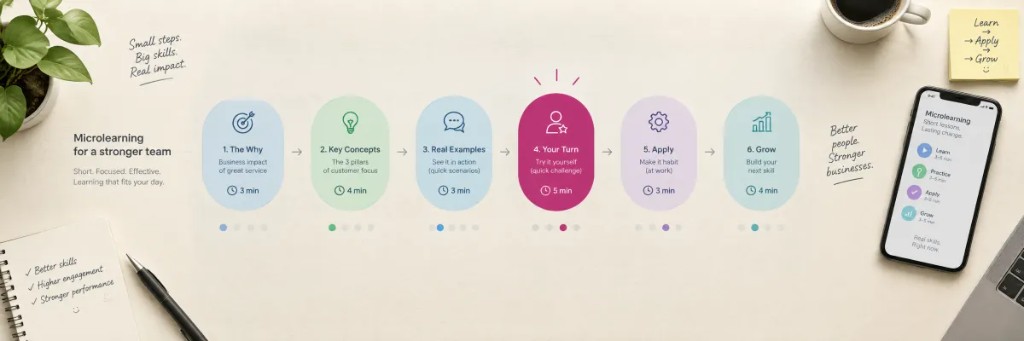
Microlearning is an instructional design philosophy: break learning into very small modules that are focused and easy to finish. Each unit teaches one thing only and takes a few minutes (usually 3–5′, sometimes up to 7–10′).
It is not:
- A long PDF split into pages.
- An hours-long course relabelled as “micro”.
- A “short read” with no objective and no feedback.
The key difference: a short read makes the user read less; microlearning makes them learn one concrete concept and be able to use it straight away. The channel matters too. A tweet can be microcontent, but a thread (or a pathway with pace, feedback and tracking) is what turns loose pieces into learning.
More context: what microlearning is and why it works and an integrative perspective.

Why it has an impact: attention, forgetting and the right moment
Cognitive load
Working memory is limited. When too much information arrives at once, it overloads and little is retained. Microlearning avoids that overload: small pieces can be processed and stored without excessive effort.
The forgetting curve and spaced repetition
We quickly forget what is not reinforced. Instead of a “batch” on a single day, knowledge is spread in doses and reviewed over time. That matches the real capacity to take in only a few concepts a day.
Just-in-time learning (JIT)
The most useful learning usually happens when it is needed: before a task, when a protocol changes, when someone uses a tool. The bite covers that moment. The 8-hour course often does not.
The time paradox
In classic e-learning, the theoretical “hours” and the time people actually spend almost never match. Less volume, well designed, usually produces more effective learning. We explain this in the microlearning paradox and in whether a 10-hour microcourse is still microtraining.
Channel, dynamics and microcontent
Microcontent is the piece. The channel and the dynamics are what keep the training moving: grouping by theme, the pace of delivery, gamification, self-assessment, feedback and analytics.
Without a channel, you have a library. With a channel, you have a habit and evidence of who finishes. That is why, at Snackson, microlearning is not only “short videos”. It is sequence, mobile and web, and tracking, on a single platform.
If you want to see microlearning out in the world (apps, habits, everyday formats): 10 examples showing you already use it and 100 related resources.
Where it fits in the company
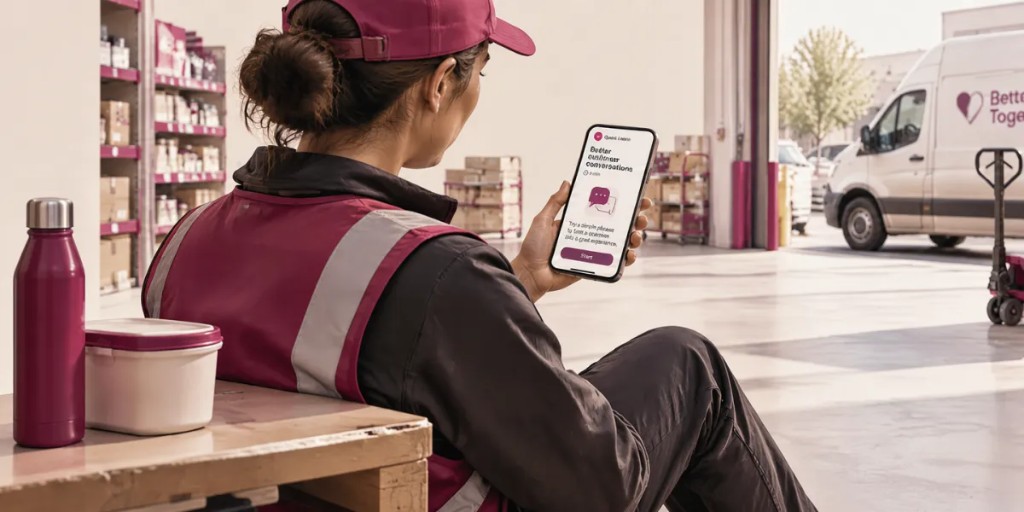
Microlearning shines when the objective is concrete and time is fragmented. Some fits we often see (with examples from the catalog):
- Sales and product training — scripts, objections, what is new. In the catalog: Effective negotiation, Emotional intelligence and customer service.
- Onboarding — what is essential today; the detail, in doses. Service: onboarding with Bienvenida.pro.
- A change of protocol — update without rebuilding a whole course. Examples: cybersecurity and phishing, GDPR, or the cybersecurity pathway.
- A complement to in-person training or an LMS — reinforcement between sessions. A typical fit: Snackson inside Moodle.
- Teams on the move, or with no desk — the phone is the classroom. Use case: microlearning in retail.
- Light-touch compliance and health and safety — bites plus a quiz, and less pushback. Catalog: health and safety for a safe workplace; pathways for health and safety and equality.
- Internal communication — align messages on the same training channel. Example: how to design effective presentations.
It does not always replace a long programme or a dense certification. Often it is the reinforcement, or the start, that makes the rest work.
How to design bites people will apply
- A single objective. If there are three concepts, there are three modules. For example: not “use the CRM”, but “find a customer”, “log a call”, “close the report”.
- Immediate use. Answer “what will I do differently tomorrow?”. A useful structure: problem → concept → action or quiz.
- Interaction. A passive video with no check retains little. A question, a scenario or a short decision — or interactives inside the microcourse.
- Brevity, with a rhythm. A clear hierarchy, little wall of text, a visual focus without noise.
- Spacing. Five minutes on several days is better than one hour a month.
- Measurement. Completion, correct answers and, if you can, a signal on the job (errors, time, quality).
Content is still the centre: content is the key. To produce it: the creation process (infographic) · if you would rather outsource it, custom courses.
How we apply it at Snackson
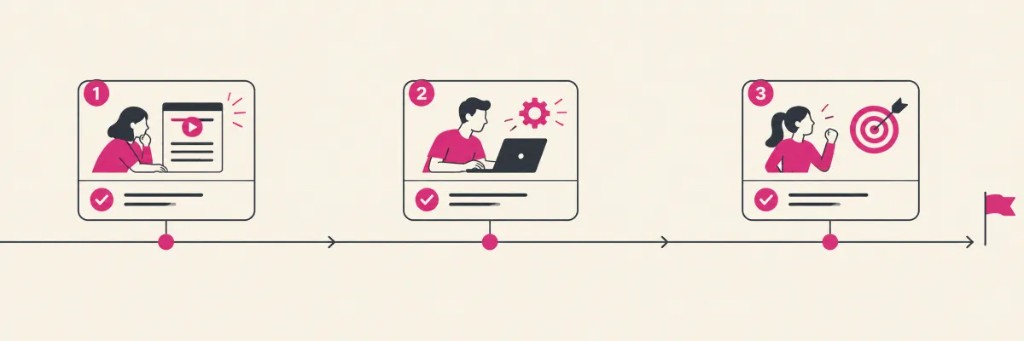
We work on microlearning in three layers you can combine:
- Platform — bites on mobile and web, simple gamification and tracking.
- Catalog or custom — ready-made courses, or turning your knowledge into microcourses; where it applies, FUNDAE-subsidised training.
- Integration — if you already have a campus, microlearning can live inside Moodle.
Gamification is not decoration: it helps sustain the habit. More in gamification.