Artificial intelligence is no longer an emerging trend. It is a reality that affects almost every job, in every sector. But between “knowing it exists” and “knowing how to use it well” there is a training gap that many organizations have still not closed. At Snackson we have developed seven AI microcourses designed to close that gap in a progressive, practical way, adapted to the workplace.
Why train your team in AI now?
The European Artificial Intelligence Act (AI Act), in force since August 2024, explicitly requires organizations to ensure a sufficient level of artificial intelligence literacy for the people who work with AI systems.
Organizations that deploy or use AI tools are responsible for making sure their teams have the knowledge they need to do so safely and responsibly. Training is not only good practice: in many contexts, it is a regulatory requirement.
Each course covers a different dimension of artificial intelligence: from the conceptual foundations to European regulation, and also ethics, content generation, the use of prompts, cybersecurity, and specific tools such as Microsoft Copilot. Together they form a complete pathway; separately, each one answers a specific need.
All the microcourses last approximately 2 hours, are available in Spanish, and work both on the Snackson platform and exported as SCORM so they can be integrated into any virtual campus.
The seven microcourses, one by one
A new member of the team
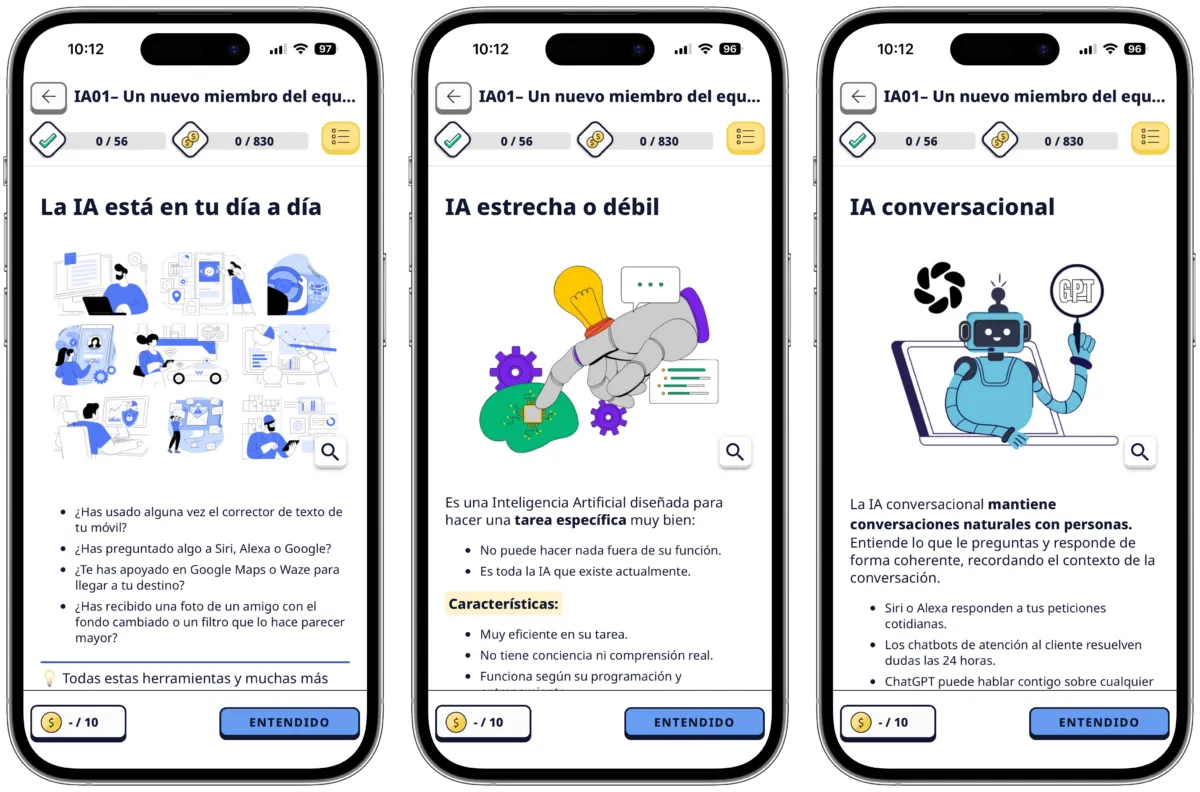
The ideal starting point for anyone approaching AI for the first time. It explains what artificial intelligence is, how it has evolved, and why it is transforming so many professions, with everyday examples that make it easy to understand without technical jargon.
Generative artificial intelligence
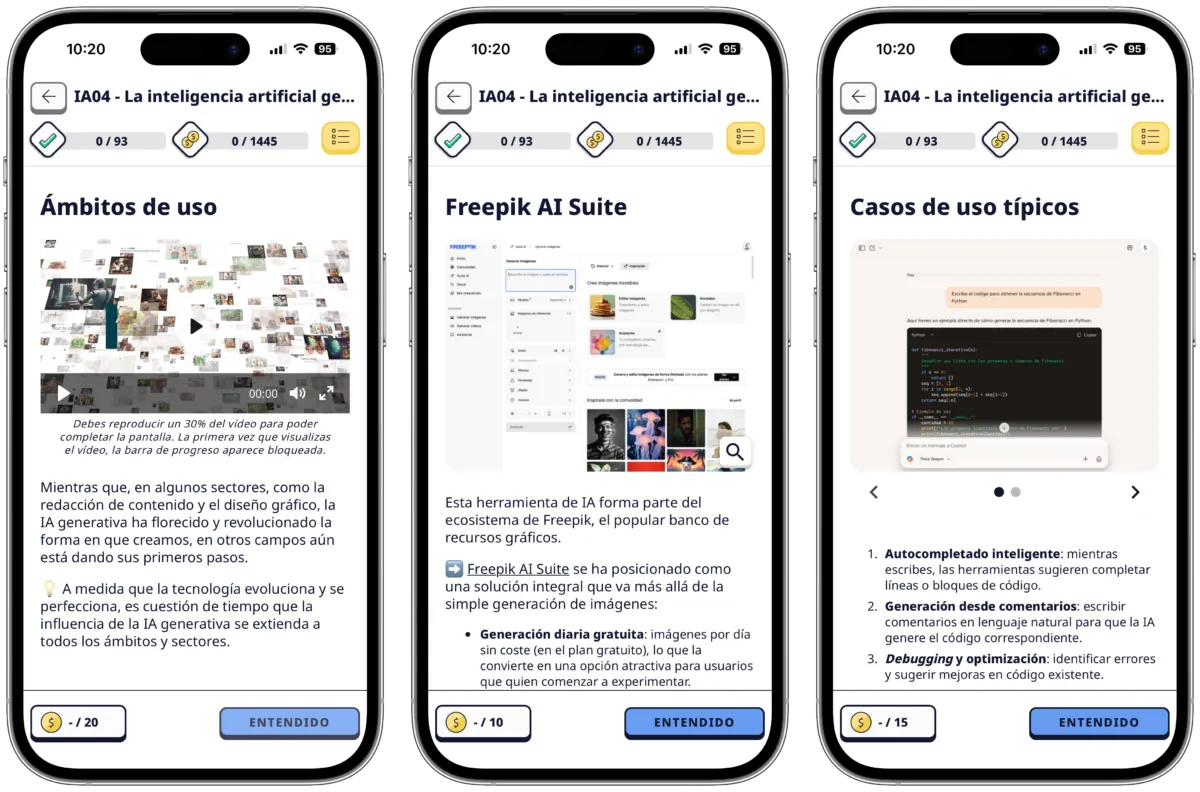
A tour of the broad generative AI ecosystem: how it works, which tools exist to generate text, images, audio, and multimedia content, and which ethical implications you need to keep in mind when using them. The broadest course in the catalog, with 93 microcontents.
How to write AI prompts
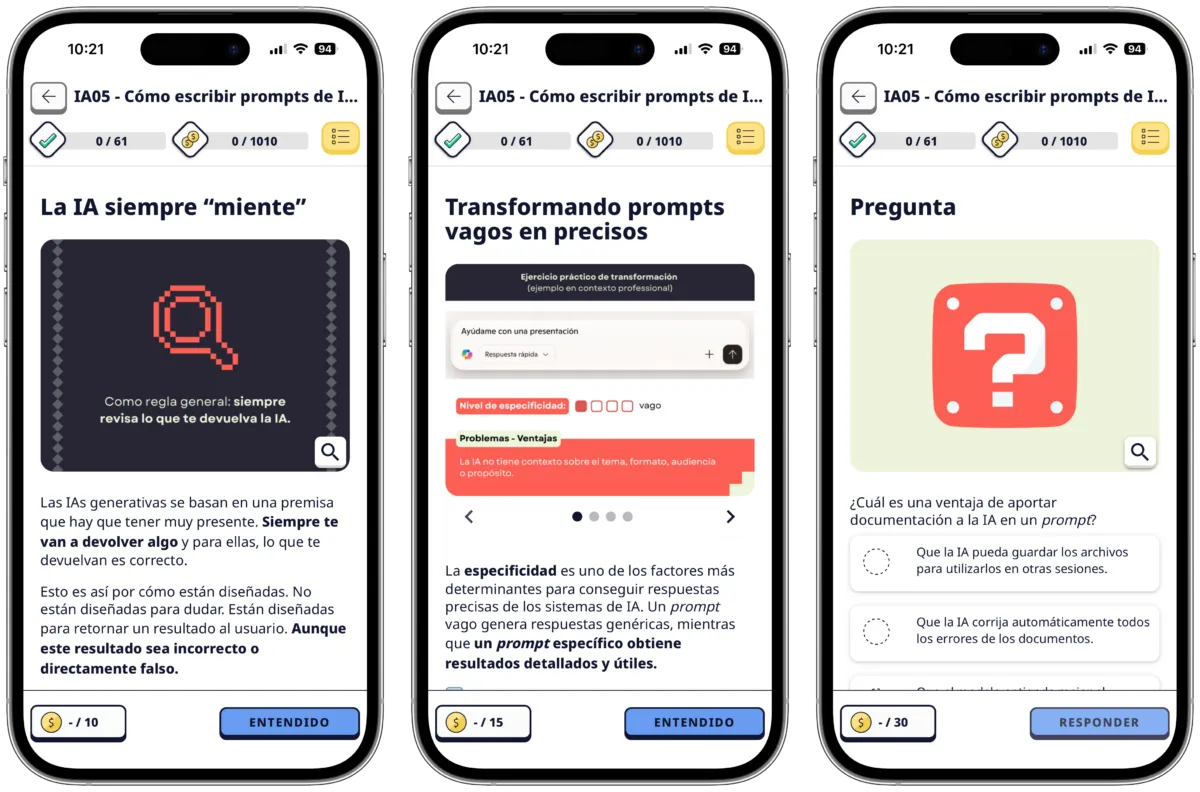
The difference between using AI in a mediocre way and getting real value from it lies in how you talk to it. This course teaches you to build effective instructions so you get precise, useful results you can apply to daily work, with practical prompt engineering techniques that any professional profile can use.
Master Copilot: your AI assistant in Microsoft 365
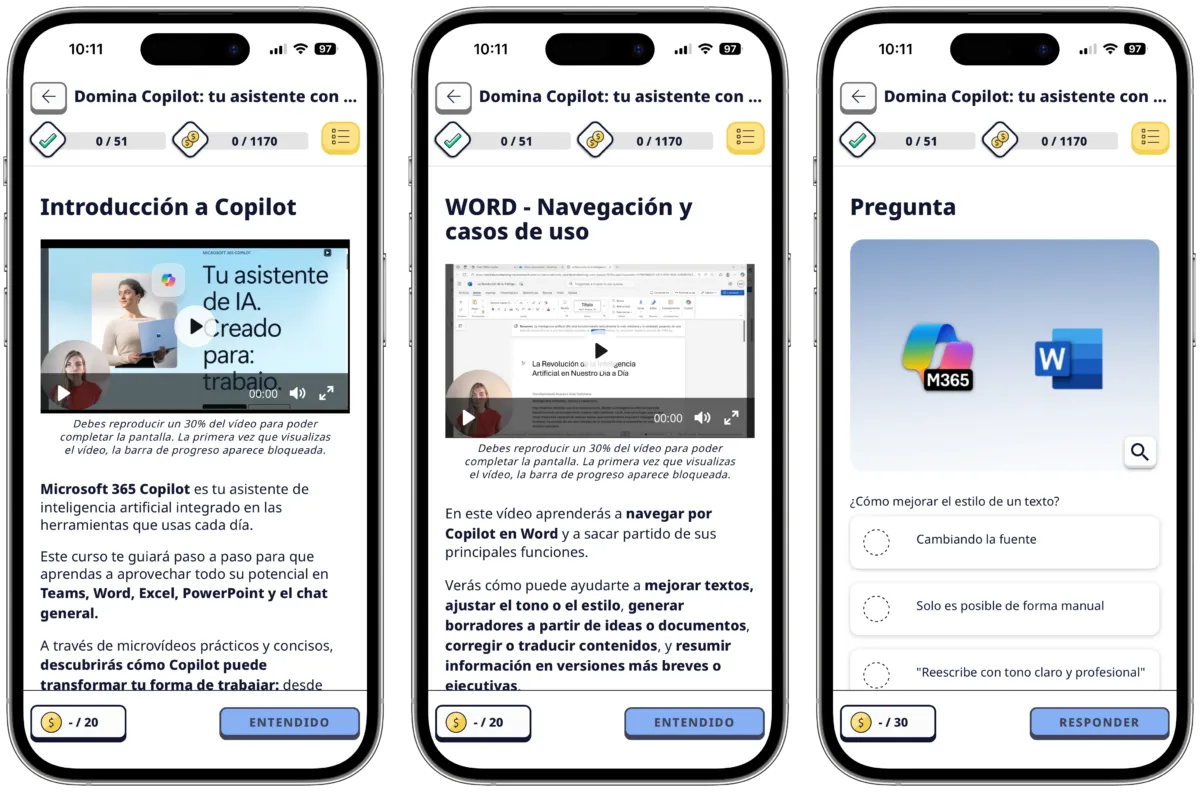
Microsoft Copilot is transforming the way people work in Office environments. This microcourse shows, step by step and through practical microvideos, how to use Copilot in Teams, Word, Excel, and PowerPoint to draft text, analyze data, create presentations, and automate tasks without leaving your usual work environment.
AI to strengthen cybersecurity
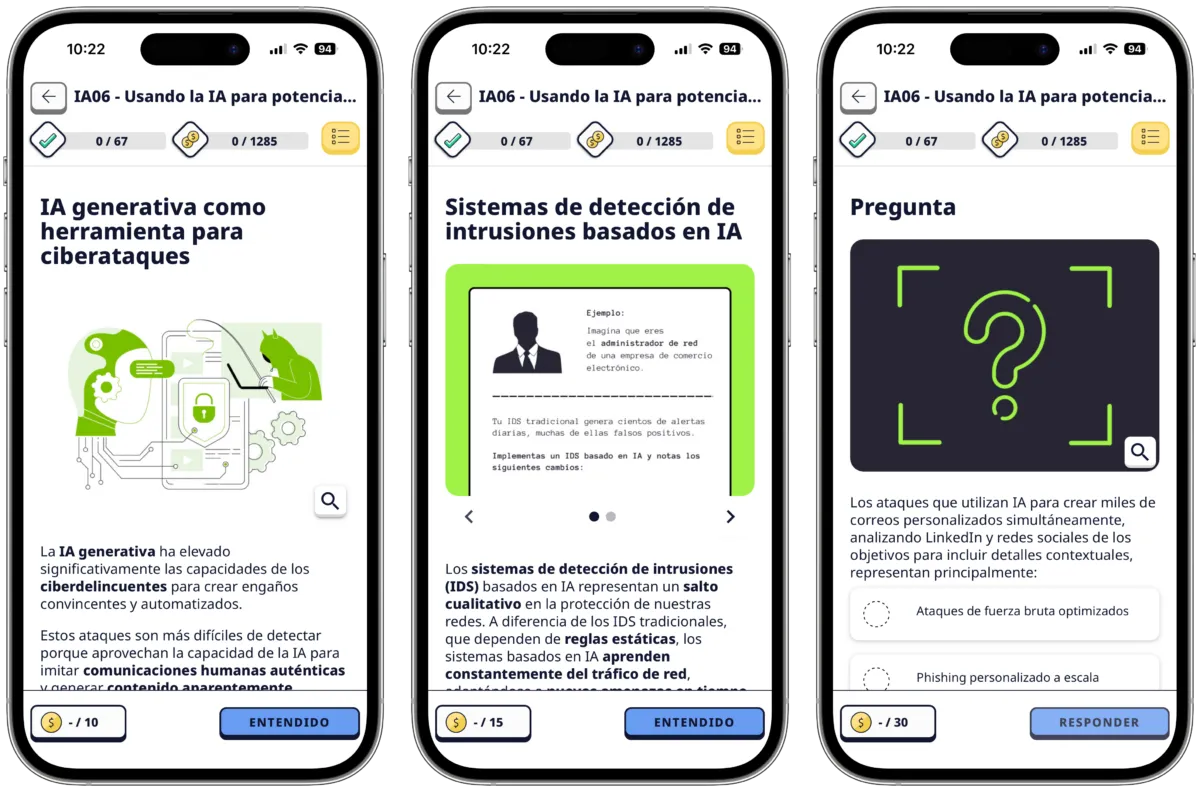
Artificial intelligence is not only a productivity tool: it is also changing the landscape of digital threats. This course explores how AI can strengthen security in organizations, which new risks it introduces, and how professionals can use it to protect their work environment better.
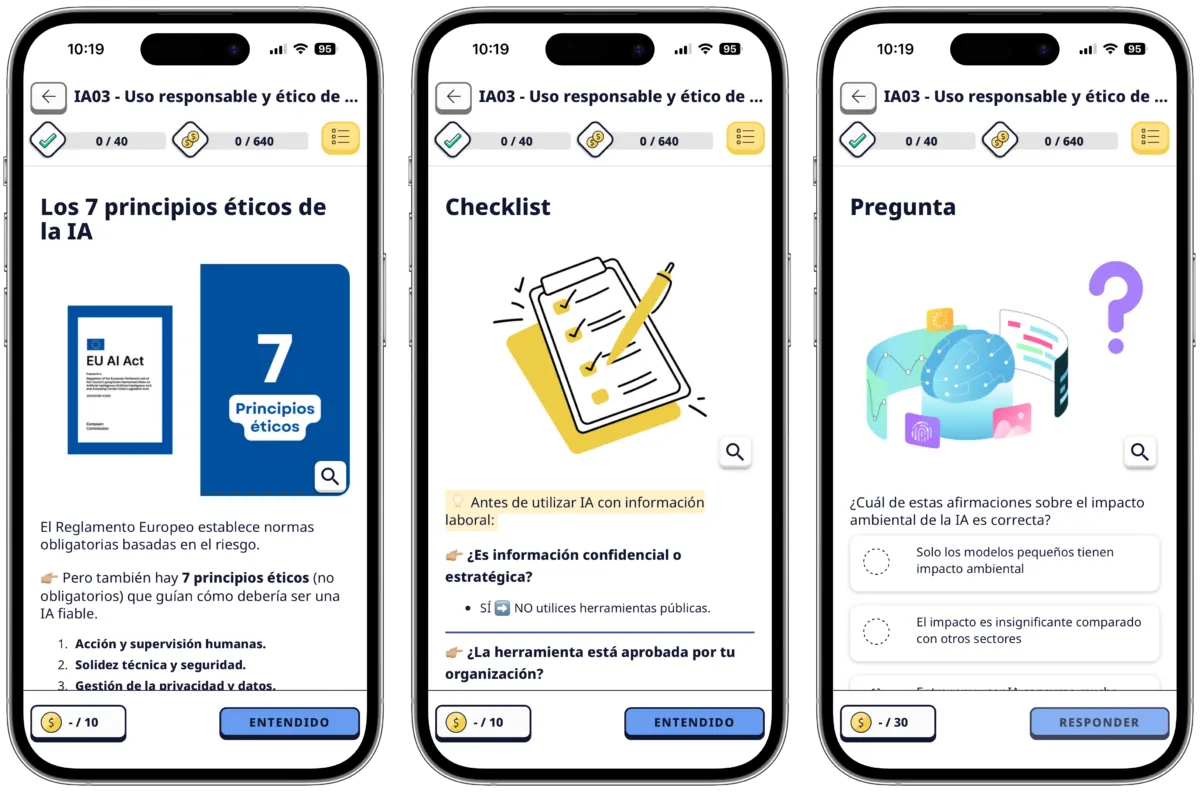
Responsible and ethical use of AI
AI systems can be wrong, reproduce stereotypes, and amplify inequalities if they are not designed and used with judgment. This microcourse looks at where bias in AI comes from, how it can affect people, and which concrete practices make it possible to use these technologies in an ethical, transparent, and safe way.
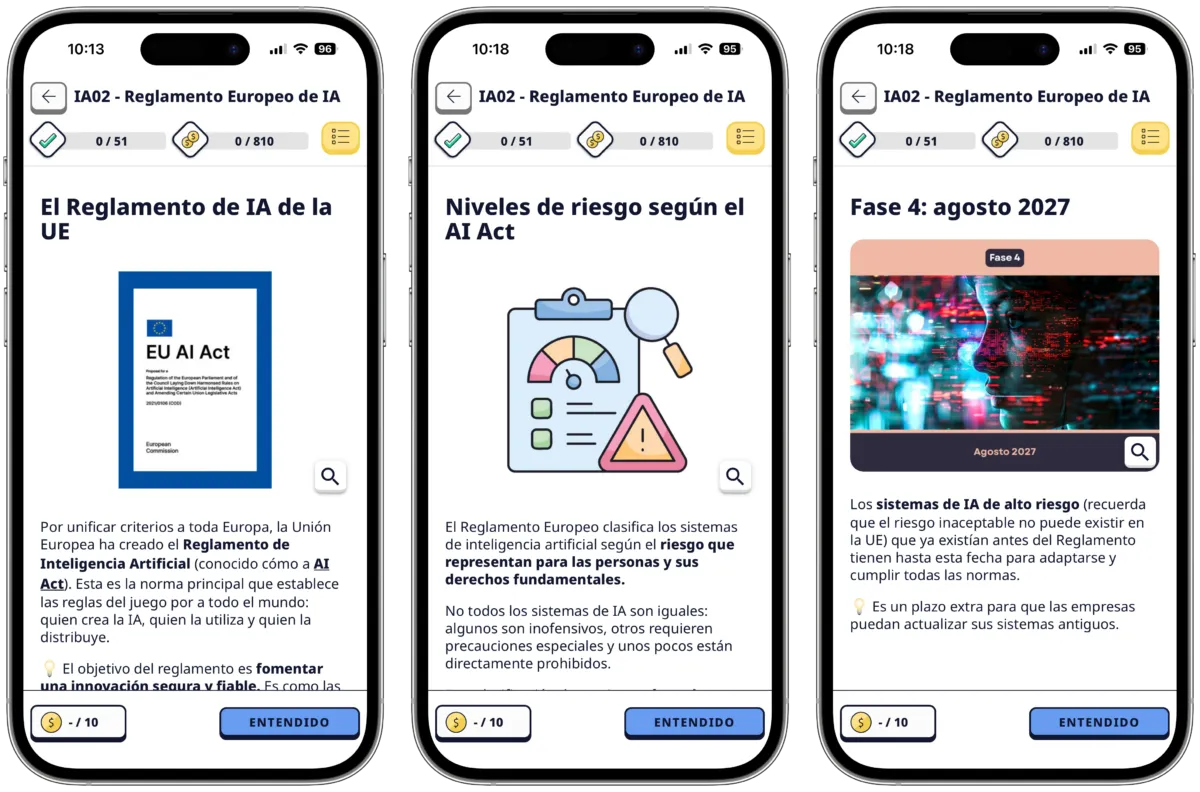
European AI Regulation (AI Act)
The European regulatory framework for artificial intelligence is already in force and affects organizations in every sector. This course explains what the AI Act means, which risk categories it sets, how it can affect day-to-day work, and what organizations need to keep in mind to comply with the regulation without giving up the potential of AI.
A single course or the full pathway?
The seven courses are designed to work on their own or as a progressive AI literacy pathway. An organization that wants broad foundational training can start with the first three and add the specific ones according to the team’s profile. People who already have prior knowledge can go straight to the courses on tools, ethics, or regulation.
The microlearning format lets you roll out the full pathway progressively — one piece of content a day, over several weeks — without overloading participants’ schedules or requiring in-person sessions. It is training that fits into the routine, rather than interrupting it.
“AI will not replace the people who know how to use it. But it can make the difference between teams that take advantage of it and teams that fall behind. Training is the bridge.”
Training eligible for funding through FUNDAE. All of these microcourses are eligible for funding through the programmed training credit managed by FUNDAE (formerly Fundación Tripartita).
Companies can fund this training in full or in part with their annual credit, at no additional cost to the organization. At Snackson we also support you with managing the funding.
These microcourses are aimed at companies and institutions that want to give their teams real, applicable training in artificial intelligence: from less technical profiles who need to understand what AI is and how it affects them, to area managers or technical staff who want to master specific tools such as Copilot or go deeper into the regulatory and ethical aspects.
In microlearning and SCORM format
Want to know how to roll out these courses in your organization, or how to design a tailored AI pathway?
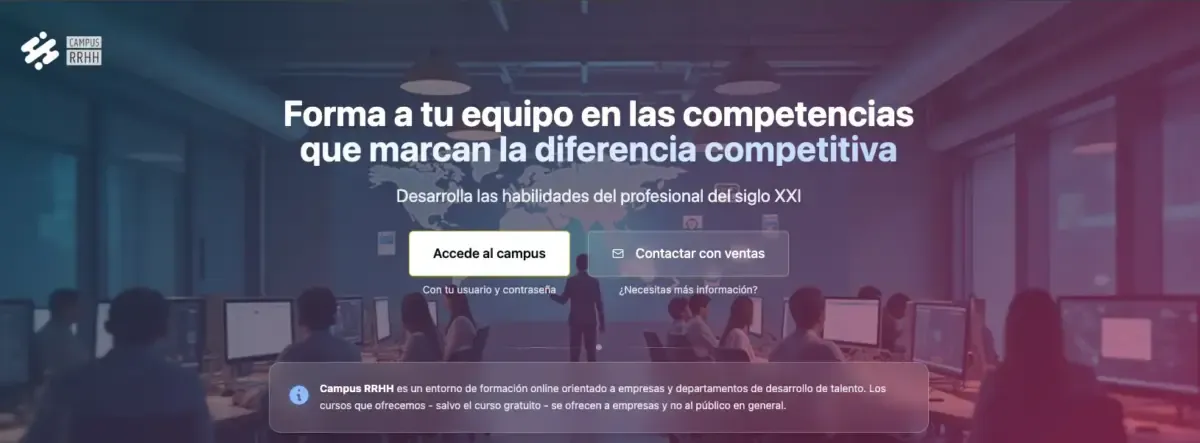
The seven microcourses are available on the microlearning platform of Snackson and can also be licensed through the Campus RRHH platform.